



Parkinson's disease is the most common neurodegenerative disorder after Alzheimer's disease. Currently, there is concern about its increasing prevalence worldwide, which is not related to population aging.
Aspects of the disease:
What is Parkinson's disease?
- Parkinson's is a chronic and progressive disease with a wide variety of symptoms that change from one individual to another, as well as its evolution over the years.
- Slowness of movement is a common characteristic in patients, but not all of them have tremors.
Symptom
There are non-visible symptoms ( non-motor symptoms ) that are part of the disease, and some of these are identified years before the onset of tremor, slowness, and rigidity in body movement ( motor symptoms ). The most frequent are: loss of smell, nightmares with body movements during sleep, constipation, anxiety, depression, and memory problems.
Treatment
- To provide comprehensive care and treatment, it is necessary to make an inventory of both motor and non-motor symptoms at each consultation, and to make an accurate account of the functional impact and quality of life that each of these generates in the patient.
- The wide range of symptoms associated with the disease necessitates the formation of a multidisciplinary working group comprised of neurology, neuropsychology, psychiatry, speech therapy, neurological rehabilitation, among other specialties, which coordinate and communicate in order to promptly detect risk symptoms and design individualized treatment strategies.
Pharmacotherapy
Drug treatment is planned for each patient in a stepped manner according to the severity, type of symptoms and stage of the disease.
Levodopa is the most effective medication in controlling motor symptoms of the disease and has some very particular characteristics to consider:
- It is the direct generator of dopamine, the substance deficient in the brain of patients with Parkinson's disease.
- Levodopa has a different starting point in the course of the disease for each patient; that is, it is not always necessary to give it from the beginning.
- The daily dose, as well as the frequency and timing, will depend on the years of illness, the symptom profile, and the degree of response.
- It is necessary to create an accurate log that relates the quality of motor function during the 24 hours of the day, so that the doctor can adjust the dose and timing of Levodopa.
■ The moments of full, effective response to Levodopa with few symptoms are called the “ON” or “switch-on” state.
■ The moments when there is no response to Levodopa and symptoms emerge are called “OFF state” or “turned off”.
Other medications:
- Other medications are usually used before starting levodopa or as a complement to its use; these are very important in controlling both motor and non-motor symptoms of the disease. The necessary combinations of these medications are determined individually based on each patient's symptoms.
- Although medicines have a broad safety profile, they are susceptible to producing some minor adverse effects, most of which are transient; however, it is important to promptly notify the treating physician of their presence.
- Taking other medications to treat other chronic diseases is common in Parkinson's patients; however, some of these medications may have adverse effects or interact with Parkinson's medications, which is why it is necessary to notify the treating neurologist of concomitant diseases and their pharmacological treatment.
- Not all symptoms depend on a dopamine deficiency in the brain; other medications that regulate other brain substances are necessary.
- La advanced disease It requires more frequent follow-up in order to decide in time whether the patient is a candidate for advanced therapies such as deep brain stimulation surgery or subcutaneous injection of apomorphine, which clearly help control symptoms with high functional impact.
Recommendations
- The integration of the patient and their family into the patient's treatment is necessary to complement medical information and detect problems early. alarm symptoms and optimize the results.
- La social and family integration around recreational and cultural activities such as the daily practice of physical exercise, They are necessary in controlling the symptoms of the disease.
- Empowering patients and their families regarding their needs and experiences allows for a change in the care model and new opportunities for the treatment of Parkinson's disease.
- La Fundación Valle del Lili and Universidad Icesi, invites you to be part of the Parkinson's Alliance Cali and of its periodic activity “Saturdays in Motion”, whose main objective is to educate and conduct research on Parkinson's disease in our population. We are part of a Global Alliance with a common goal.
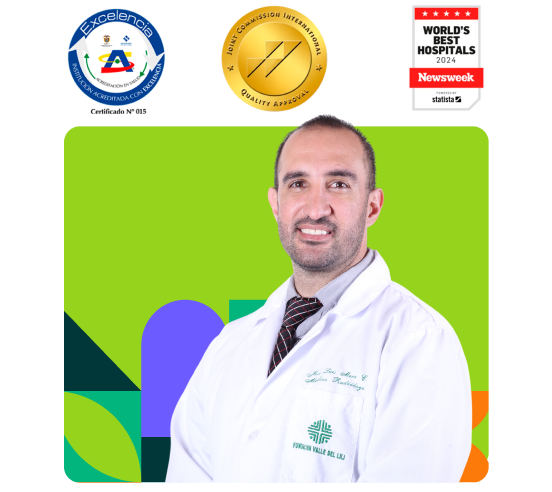
Jorge Luis Orozco Vélez, Head of Neurology. Specialist in Parkinson's and Movement Disorders.
Fundación Valle del LiliDirector of the Parkinson's Alliance in Cali.