



Author

Dr. Juan Felipe Pinilla Hurtado, Dermatologist University Hospital Fundación Valle del Lili
In the midst of our daily activities and hustle and bustle, it's common to forget about taking care of our skin. Many of us have moles, and when a new one appears or we notice changes in an old one, we tend to think it's normal or simply ignore it. We must understand that monitoring our skin isn't just about aesthetics; it's a fundamental act of self-care that can make the difference between good health and a serious illness. We invite you to reflect: When was the last time you carefully observed the signals your skin sends you?
What exactly is melanoma and why is it so aggressive?
Melanoma is the deadliest type of skin cancer , originating in melanocytes, the cells that give our skin its pigment. Although it accounts for only 2% to 5% of skin cancer cases, it is responsible for the vast majority of deaths (70% to 80%) due to its highly aggressive behavior and its ability to spread rapidly to other organs. In Colombia, the overall five-year survival rate is 79%, but this figure drops drastically if the diagnosis is not made early.
Why is the risk greater in a country like Colombia?
Our geographical location near the equator exposes us to very high levels of ultraviolet (UV) radiation , a factor involved in 80% of cases. Furthermore, altitude is a critical factor: in our mountains, for every 1,000 meters of elevation, UV exposure increases by 10% to 12%. This means that those living in high-altitude cities face a greater environmental risk requiring stricter protection.
What personal risk factors can influence its development?
People with fair skin are more susceptible, although melanoma can also develop in dark skin; in these cases, it is usually diagnosed later. Other important factors include a personal or family history of melanoma, which is related to a genetic predisposition.
How does melanoma present itself and what are its common forms?
Melanoma can appear as a new mole or as a change in an existing one. The most common forms include lentigo maligna , which frequently occurs in sun-exposed areas such as the face, and acral lentiginous melanoma , very common in the Latino population, which appears on the palms of the hands, soles of the feet, or under the nails. These latter areas are often overlooked, leading to delayed diagnosis.
There are other forms such as superficial spreading melanoma , which usually grows flat and is associated with previous moles, and nodular melanoma , an aggressive variant that deepens rapidly into the skin and usually has a poor prognosis.
What are the consequences of not detecting it in time?
In Colombia, the average time between a patient noticing a lesion and receiving a confirmed diagnosis is 17 months , a delay that seriously compromises health. If the cancer progresses to later stages (Stage IV), the two-year survival rate drops to less than 50%. Conversely, detecting it at an early stage or in situ raises the probability of survival to over 90%.
How can it be prevented and what technologies help with diagnosis?
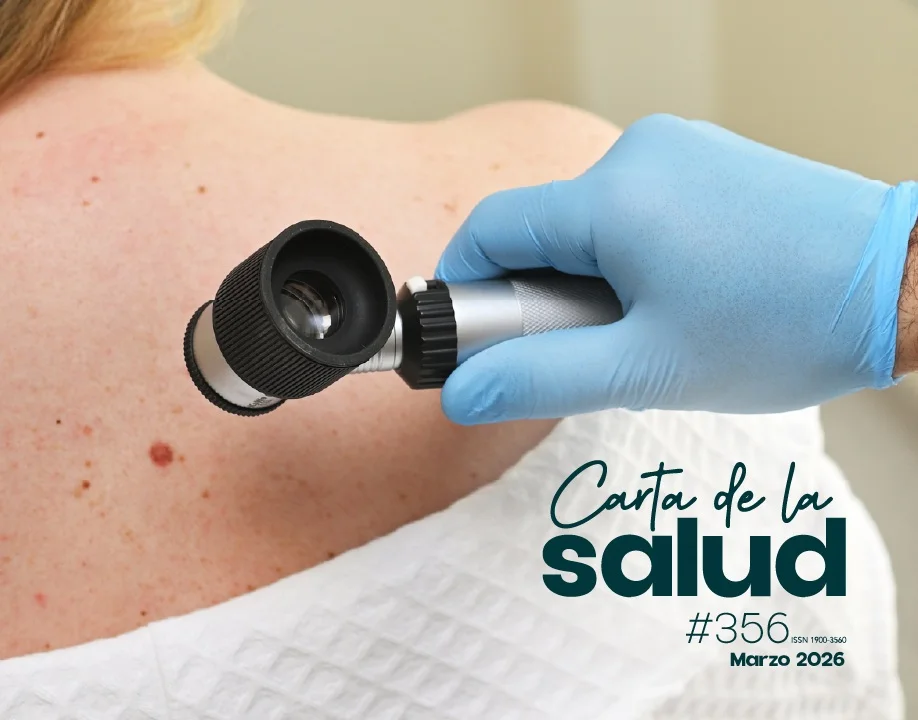
Prevention begins with sun protection : use sunscreen daily, wear long-sleeved clothing, wear a hat, and avoid direct sunlight during peak radiation hours. In addition to regular self-examination and annual dermatological checkups, there is Automated Body Mapping for high-risk patients. This tool uses high-resolution digital photography and Artificial Intelligence to detect minute changes imperceptible to the human eye, helping to make objective decisions and avoid unnecessary biopsies.
In conclusion, developing a culture of self-care is the most important step. Adopting preventative measures, routinely checking your own skin, and consulting a dermatologist regularly allow for the early detection of any suspicious changes. Remember that detecting melanoma when it is still superficial offers a survival rate of over 90%, improving the prognosis and transforming the patient's future.
In case you require a consultation with a dermatologistYou can request it at the Fundación Valle del Lili to the PBX (602) 331 9090.