




Authors: Dr. Hernán G. Rincón Hoyos, Psychiatrist | Dr. María Mercedes Cardozo, General Practitioner | Laura Daniela Soto F., Psychiatry Resident. Universidad Icesi | Joseph Ricardo Perea, Psychiatry Resident. Universidad Icesi
Adverse childhood and adolescent experiences (ACEs) can have negative short-, medium-, and long-term health effects. When harmful effects occur, the child or adolescent is considered to have suffered psychological trauma, and the resulting pathological effects can persist into adulthood.

Psychological trauma (PT) is an emotional, cognitive, physical, social, or spiritual impairment related to exposure to physical or psychological abuse or violence, whether subtle or overt. It can occur at any point in life and has cumulative effects. In children, PT affects brain development, leading to early cognitive and emotional changes, as well as alterations in the physical, mental, and addictive health of adolescents and adults.
In addition to the most common ACEs (Adverse Events in Children), other experiences with the potential to cause psychological trauma in children and adults have been described, such as armed conflict, natural disasters, and interpersonal violence. Statistics suggest that between 25 and 30% of the world's population has experienced some significant trauma in their lifetime. In Colombia, one in five people has been exposed to violence related to armed conflict. The 2015 National Mental Health Survey indicates that violence affects all households, especially the poorest populations exposed to situations of war and forced displacement.
In recent decades, progress has been made in understanding the psychological and biological mechanisms of psychological trauma. This Health Charter addresses the concept of adverse experiences in childhood and adolescence and psychological trauma, its characteristics, consequences in adulthood, and recommendations.
Figure 1 describes several levels at which traumatic experiences can occur. While it is common to describe experiences that occur at an individual level, it is important to remember that the same traumatic experience or group of experiences can happen to families or large groups of people.
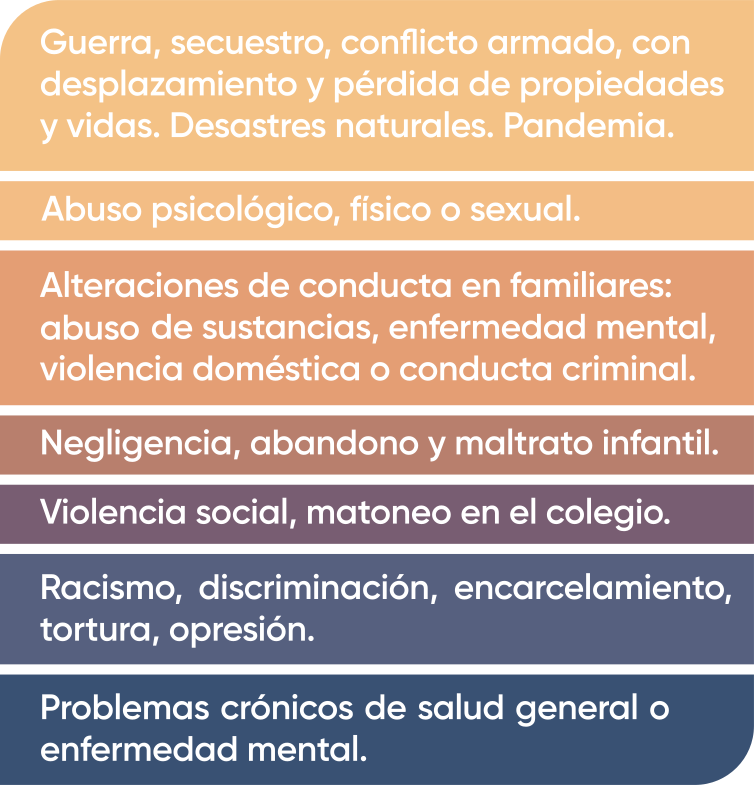
Regarding the types of potentially traumatic experiences, Figure 2 describes examples in children or adults.
Figure 1: Levels of adverse experience and types of trauma
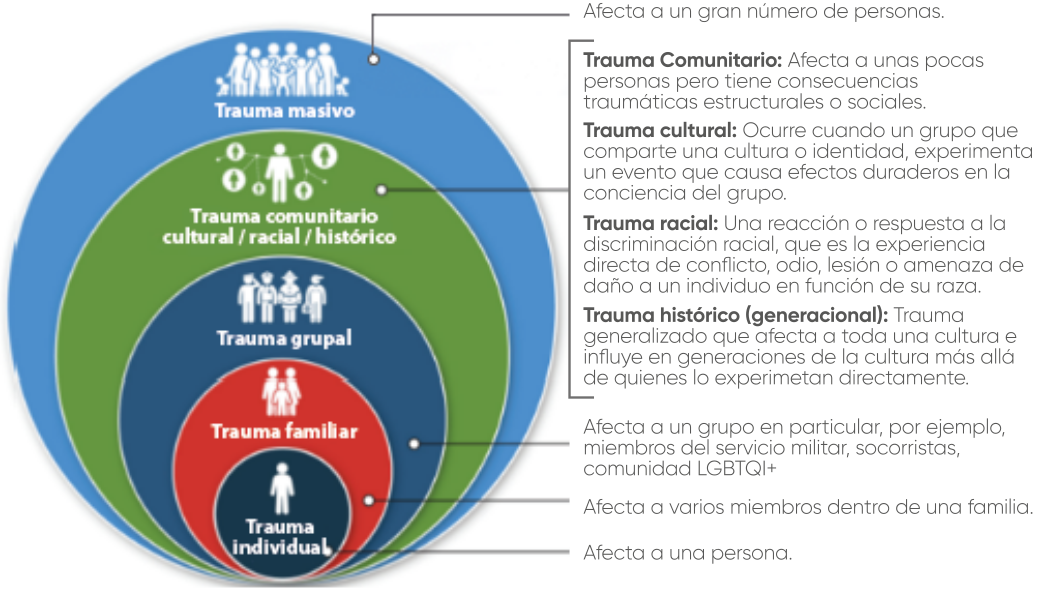
Figure 2: Examples of traumatic experiences
Impact, physical, mental and addictive effects of psychological trauma:
For centuries, general and specialized literature has described the emotional impact of exposure to war and armed conflict, which frequently leads to addiction. In the last century, much has been written about war neurosis observed in veterans, which led to the inclusion of the diagnosis of post-traumatic stress disorder (PTSD) in the 1980s and, more recently, complex post-traumatic stress disorder (CTSD). The latter is associated with exposure to multiple adverse experiences, resulting in cumulative trauma. Figure 2 presents various examples of traumatic experiences, in addition to war experiences.
However, it was only at the end of the 20th and beginning of the 21st century, as a result of a study in a population of 9,508 chronically ill adults (ACE study) between an American insurance company and the Center for Disease Control of the United States, that it was possible to identify that ACEs had a potential traumatic effect that affected not only the mental and addictive health of the child and adolescent, but that its effect extended into adulthood with risk of unhealthy behaviors (abuse of tobacco, alcohol, substances, poor compliance with treatments, inadequate diet and obesity, sedentary lifestyle, hypersexuality, depressive mood and suicidal attempt, among others) and chronic mental illnesses (anxiety, depression, etc.), as well as other non-mental systems (coronary disease, hypertension, cancer, autoimmune diseases, stroke, obstructive pulmonary disease, metabolic disorders and diabetes, accelerated aging, etc.).
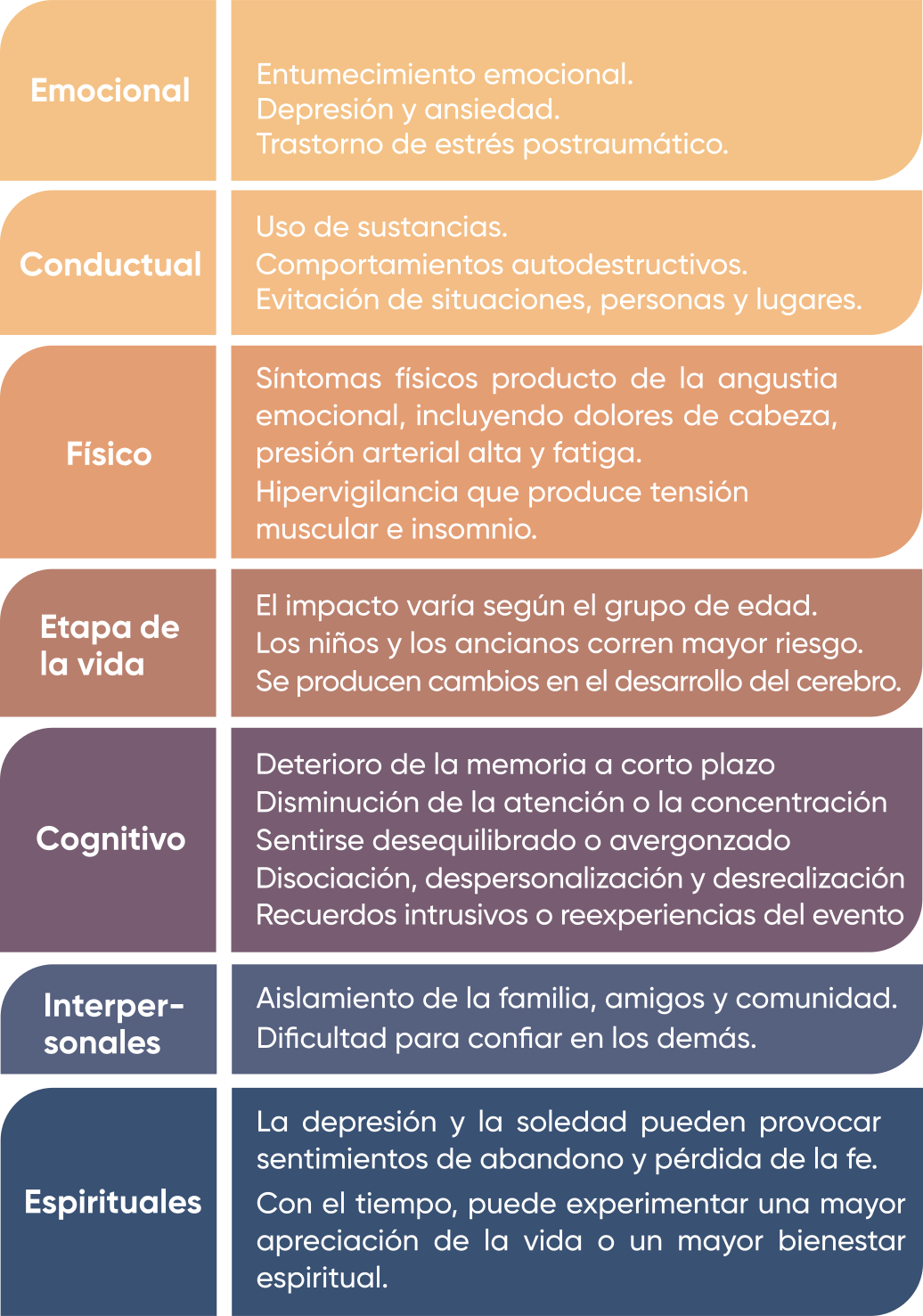
Figure 3 describes the impact of TP on different aspects of a person's functioning.
Psychological and physiological mechanisms
Personality disorder alters brain development, particularly affecting structures recognized as necessary for memory and the experience of emotions (hippocampus); the fear response and survival reaction (amygdala); and control, planning, and decision-making (prefrontal cortex). These alterations can result in impaired neuronal adaptation mechanisms to change (neuroplasticity) and changes in the regulation of gene expression (epigenetic changes). The individual is left in a state of permanent insecurity, which can range from fear to terror. The normal and predictable stress response, which is usually moderate and controlled, is affected. It becomes more unpredictable, and in some cases, it can be extreme and prolonged, with characteristics of sensitization. This means that even minor stimuli can trigger heightened stress responses and poor emotional regulation, demonstrating high vulnerability. Furthermore, a deficit in decision-making develops.
Similarly, stress resilience is impaired (a narrowing of the tolerance window), with frequent episodes of perceived severe stress (hyperarousal) or stress avoidance (hypoarousal). In the case of hyperarousal, there is a greater predisposition to feeling threatened or insecure, with an impulsive or aggressive response. In the case of hypoarousal, the person may be more prone to feeling nervous or avoidant, and in extreme cases, may experience confusion and exhaustion. In both cases, hyperarousal and hypoarousal are defensive mechanisms used by the mind to protect the person from further potentially traumatic experiences.
Several mechanisms have been described that affect health in other bodily systems. On the one hand, post-traumatic stress (PT) determines unhealthy behaviors, such as smoking, alcohol, or substance use, which in turn predispose individuals to chronic diseases. On the other hand, increased reactivity to stress (chronic stress) generates hormonal changes such as increased cortisol levels, alterations in neurotransmitters related to the stress system, such as norepinephrine and dopamine, and alterations in substances of the immune system, predisposing individuals to the development or activation of various pathologies, both infectious and non-infectious. Additionally, alterations in the regulatory and counter-regulatory mechanisms of the autonomic nervous system, or the system that involuntarily regulates physiological activities such as heart rate, respiration, and blood pressure, can occur, predisposing individuals to tachycardia or syncope.
Self-assessment and diagnosis
Various instruments exist for assessing the history of early traumatic experiences, such as interviews or self-reports. Some evaluate multiple types of traumatic experiences, while others focus on only one type. The ACE study used the Adverse Childhood Experiences Questionnaire for adults. However, diagnosing psychological trauma in adults can be complex and requires a professional evaluation by trained mental health personnel. Furthermore, it is important to emphasize that most cases in children go undetected due to the child's shame, their dependence on adults, or the family environment in which the trauma occurs.


Transgenerational effects
Transgenerational trauma refers to the transmission of traumatic experiences and their psychological effects from one generation to the next. This phenomenon can occur when parents who have suffered severe trauma, such as abuse, war, or forced displacement, fail to adequately process their experiences and pass on dysfunctional patterns of behavior, attitudes, and emotional responses to their children. The effects of transgenerational trauma can manifest as emotional, cognitive, and social problems in subsequent generations. To help prevent the cycle of trauma transmission, it is necessary to strengthen social and family support, promote safe and stable environments, and educate families about the effects of trauma. Furthermore, it is recommended to implement early and sustained interventions, including trauma-focused psychological therapies.
Recommendations for prevention, self-care, treatment and rehabilitation
Prevention in children and adolescents:
Traumas resulting from actions (abuse, mistreatment, alcohol or substance use in the home, domestic violence, among others) and from omissions (lack of attention, neglect, abandonment, etc.) are described. Those who care for children and adolescents should receive guidance, training, and in some cases, basic psychotherapy to avoid exposing minors to potentially traumatic adverse experiences. In cases of specific exposures to trauma or abuse of a minor, it is recommended to seek medical and psychological help as soon as possible.


Prevention in children and adolescents:
Traumas resulting from actions (abuse, mistreatment, alcohol or substance use in the home, domestic violence, among others) and from omissions (lack of attention, neglect, abandonment, etc.) are described. Those who care for children and adolescents should receive guidance, training, and in some cases, basic psychotherapy to avoid exposing minors to potentially traumatic adverse experiences. In cases of specific exposures to trauma or abuse of a minor, it is recommended to seek medical and psychological help as soon as possible.
Adults with a history and effects of psychological trauma:
When there are chronic physical and mental illnesses with a history of exposure to adverse drug reactions (ADEs) or cumulative traumatic experiences, the individual may require joint management by a medical specialist and a mental health team. A diagnostic evaluation should be performed, followed by a treatment plan, usually interdisciplinary. Some treatment approaches that have proven useful in managing the consequences of psychological trauma include:
- Mindfulness therapy: Mindfulness involves intentionally focusing attention on the present moment without judgment. Trauma leads to a constant state of alertness, reliving emotionally impactful events or anticipating future dangers. Mindfulness provides tools for self-acceptance, greater emotional awareness, stress reduction, and improved emotional regulation.
- Other self-care strategies These include yoga, meditation, board games, physical exercise, and sports. It's important that these strategies become a self-care routine and are integrated into daily life to be effective.
In severe cases where functionality is impaired, other interdisciplinary mental health interventions are likely to be required. Psychotherapy in adults is the cornerstone of early trauma management. Trauma-oriented cognitive behavioral therapy (TABT), which focuses on identifying and changing negative thought and behavior patterns, has the strongest evidence base. Other therapies relevant to trauma, such as eye movement desensitization and reprocessing (EMDR) and trauma-oriented dialectical behavior therapy (DBT), have also been studied. In addition, depending on the case, medication, prescribed under the supervision of a psychiatrist, may sometimes be necessary.
Other forms of trauma-oriented therapy include: internal family systems psychotherapy (follows systemic psychotherapy guidelines, but works on the individual), sensorimotor psychotherapy (is individual and takes into account physical characteristics, motor habits, etc.), hypnotherapy (based on hypnosis), trauma-oriented neurofeedback psychotherapy (supported by electroencephalography techniques, aimed at improving cross-talk between neural networks), sensorimotor activation regulation psychotherapy - SMART (uses some elements of a gym, but guided by a psychotherapist), and others.
Informed care in psychological trauma
In developed countries, given the understanding of the high prevalence of childhood trauma among chronically ill populations, the concept of trauma-informed care has been developed. This involves training healthcare professionals in hospitals on the fundamentals of psychological trauma, fostering their personal growth, a better understanding of themselves and their colleagues, and enabling them to collectively provide personalized and compassionate care. The aim is to create a more positive work environment and culture, leading to better outcomes and reduced risks.
These concepts are applicable to other work and family contexts. For example, a person in a supervisory or managerial role, a healthcare professional, a teacher, a parent, a religious leader, or a sports team coach, etc., should have greater self-awareness regarding their personal history and their way of relating to others, in order to offer a psychologically safe and healthy environment for the people they lead.
Conclusions
Psychological trauma is a common problem worldwide and can have profound and lasting effects on physical and mental health, as well as on the risk of addiction. Prevention and early intervention can mitigate its impact and prevent its transmission to future generations. Therefore, it is important to seek timely support from healthcare professionals.
Helplines to find in case of a mental health emergency:
- 106 – Cali District Secretariat. Psychology Professional. 24/7 availability.
- 3162458523 – WhatsApp of the Cali Health Department.
- 3105356615 – WhatsApp of the Health Secretariat of the Department of Valle
- 125 – Medical emergencies, life-threatening health emergencies.
- 123 – National Police.
Online educational resources from the United States government:
- National Institute of Mental Health: How to overcome traumatic events www.nimh.nih.gov/traumaticevents.
- National Institute of Mental Health: Children's and adolescents' mental health www.nimh.nih.gov/childrenandadolescents.
- Centers for Disease Control and Prevention: How to care for children in a disaster www.cdc.gov/childrenindisasters/es.
- National Network for Childhood Traumatic Stress: www.nctsn.org/resources/information-in-spanish.