




Authors:

Dr. Mónica Raffal

Dr. Juliana Andrea Mendoza
In speech therapy consultations , when a child is referred for the habit of breathing through their mouth, parents often ask different questions: Why is he/she being referred to speech therapy? What happens when the child breathes with their mouth open, what consequences can it have?
Sometimes adults, due to a lack of knowledge on the subject, do not consider it relevant to consult a doctor when a child breathes with their mouth open or slightly open.
It is important to make this habit visible, in order to treat it early, because it can affect facial growth, dental occlusion, sleep and speech in children.
Mouth breathing is one of the most common harmful oral habits in childhood. The nose and pharynx are the most affected organs, with the most relevant causes being pathologies such as allergic rhinitis, adenoid hypertrophy, and/or tonsil hypertrophy.
Chronic mouth breathing is associated with various craniofacial and myofunctional disorders, as well as negatively affecting other functions such as chewing, swallowing, and speech.
What do we mean by proper breathing and why is it essential for children to acquire it from the first years of life?
Breathing occurs in two phases, inspiratory (breathing in) and expiratory (breathing out): both represent a respiratory cycle.
The function of the nose is generally related to breathing, smell, phonation, and articulation.
The nose has a microbial, antiviral and immunological action and performs other functions such as humidifying, warming or cooling and filtering the inspired air.
It is important to note that the nasal breathing pattern allows for balanced growth and development of the mouth and the middle and/or lower third of the face.
Nasal breathing promotes the balance of pressures within the mouth exerted on the jaw, maxillae and teeth, protected by the lips, and thus the tongue will also rest against the palate so that it develops well and all the structures are properly molded.
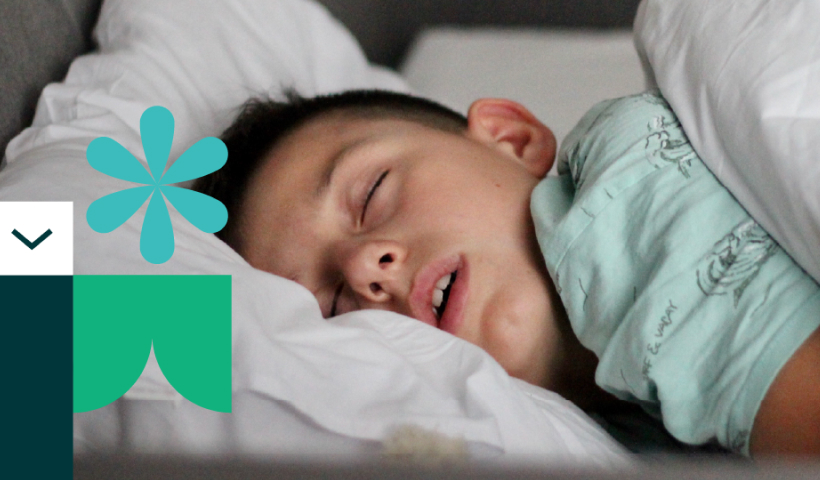
mouth breathing
Who is considered a mouth breather?
A mouth breather is defined as someone who replaces nasal breathing with mouth breathing or combines both patterns for a period exceeding six months. However, it's important to note that some people exhibit this habit without experiencing any respiratory problems.
Breathing disorders can affect all ages (infants, children and adults), but the highest peak incidence occurs between 3 and 7 years of age, which is when they have a greater number of infections or allergies.
Why might mouth breathing occur?
Functional or anatomical obstruction occurs when there is an obstacle that prevents the normal flow of air through the nasal passages or nasopharynx.
Another consequence of functional mouth breathing is the development of bad oral habits: atypical swallowing, tongue thrusting, and thumb sucking, among others, which contribute to this type of breathing.
Breathing through the mouth or in a mixed manner can cause various long-term problems and consequences in children, affecting their growth and development. It not only produces facial, oral, skeletal, and postural changes, but can also influence sleep, behavior, and school performance.
What are the types of mouth breathers?
They can be divided into three groups according to the etiological factor:
- Mouth breathing due to nasopharyngeal airway obstruction: turbinate hypertrophy, adenoid hypertrophy, atresia or severe tonsil hypertrophy, allergic rhinitis, among others.
- Bad Breathing Habit: These are patients who at some point had an obstructive factor present, which is corrected, but the habit persists.
- Postural abnormalities: These are patients with ligamentous hyperlaxity. In these patients, the lower jaw tends to drop, and the patient opens their mouth, which can lead to mouth breathing.
What changes can occur in a child when breathing through the mouth?
Facial changes
The face is thin and elongated, with a narrow nose, an open mouth, low muscle tone in the cheeks, a short upper lip, a thick and drooping lower lip, and chapped and dry lips. Pronounced dark circles under the eyes are also present.
Changes inside the mouth
- The palate is high and narrow, and as modifications occur in the upper and lower jaw (mandible), the bite and the position of the teeth are altered (rabbit teeth).
- The tongue remains low and is sometimes positioned between the teeth, also altering the swallowing function.
- Gum inflammation and cavities can occur due to dry mouth.
Changes in posture and body development
They tilt their head forward, their neck is shorter and stiffer, and they tend to have pain in the neck muscles, with limitations in movement. A sunken chest (petus excavatum) is observed, and the shoulder blades protrude from the back like wings (winged scapulae). Spinal abnormalities (scoliosis or hyperlordosis) are also present.
Poor posture affects diaphragmatic and abdominal activity, decreasing the expansion of the rib cage and lungs. As ventilation (oxygen exchange in the lungs) becomes less efficient, fatigue sets in more easily, and physical exertion tolerance is reduced.
Other alterations
- Feeding problems: the mouth cannot do two things at the same time (breathe or chew), resulting in poor appetite and difficulty chewing and/or swallowing. In addition to the above, allergic rhinitis causes inflammation of the specialized cells responsible for smell perception. Therefore, if I cannot smell food properly, it will not appeal to me, since taste and smell are closely linked.
- Recurrent ear infections and hearing loss.
- Attention and concentration difficulties, which can lead to disruptions in school learning.
- Problems in mechanizing the sound of rhotic phonemes /r – rr/ or bilabial phonemes.
- Voice alteration: increased nasal resonance
- Sleep disorders: sleep apnea, disturbed sleep, daytime sleepiness, snoring.
- Irritability.
What symptoms do children who breathe through their mouths exhibit?
The most frequent symptoms of patients who breathe through their mouths are pain in the neck muscles, in the sides of the chest, rapid fatigue when performing physical activities; halitosis, decreased sense of smell and taste, poor sleep, the mouth remains very dry, cracked lips (dryness), daytime sleepiness, sialorrhea, spitting when speaking, dark circles under the eyes, etc.
What is the role of the speech therapist in the treatment of the mouth-breathing child?
The speech therapist plays a fundamental role, focusing on re-educating the orofacial muscles and achieving a correct breathing type and mode.
The main tool in speech therapy intervention is myofunctional therapy, which is defined as:
A set of techniques designed to correct orofacial muscle imbalances and re-educate compromised motor patterns. This therapy aims to achieve proper tongue positioning, improve lip seal, and enhance the function of the mouth and facial muscles without increasing the size or strength of the facial muscles. Nasal breathing is promoted, and other inappropriate habits such as thumb sucking and atypical swallowing are corrected. This therapy not only improves respiratory function but also speech, chewing, and the patient's facial aesthetics.
The main objectives of orofacial myofunctional rehabilitation in this case are:
- Acquire nasal and costo-diaphragmatic breathing.
- To tone the lip, tongue and chewing muscles.
- Correct the position of the tongue and lips at rest.
- Re-educate the position of the tongue during swallowing.
What is evaluated before starting speech therapy?
Evaluation
It should begin with taking a medical history, where the causes and alterations caused by mouth breathing can be identified; these may go unnoticed.
The clinical examination of patients includes the study of all facial and masticatory muscles: masseter, buccinator, orbicularis oris, and chin muscles. Each orofacial function is carefully evaluated: breathing, speech, phonation, chewing, and swallowing.
In accordance with each patient's commitment, the relevant referrals are made and a treatment plan is created.
What interdisciplinary team is involved in the treatment of a child who breathes through their mouth?
Whenever the case warrants it, it is important to work with a multidisciplinary team, which can carry out the assessments, therapies or treatments corresponding to each area and thus provide a comprehensive treatment to the patient, obtaining faster and better results; preventing a relapse or regression in the process.
The Otolaryngologist plays a very important role within the team , as he is the professional in charge of evaluating, diagnosing and treating obstructions at the nasal level or of the upper respiratory tract.
Dentists and orthodontists focus their intervention on the evaluation of facial and dental structure, and the correction of malocclusion problems.
The Physiotherapist and the Occupational Therapist work on the management of inadequate body postures adopted by children and in some cases on the management of attention problems.