



Palliative care
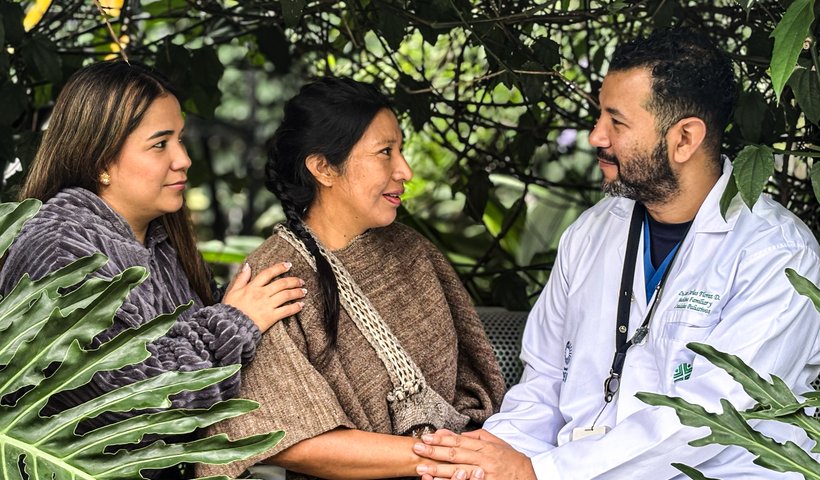
Where accompanying is also about comforting: In the Fundación Valle del LiliWe believe that caring is much more than treating an illness. It's about listening, comforting, accompanying, and supporting.
Palliative care is a specialized medical approach designed to improve the quality of life of adult patients and their families when they face a chronic, serious, or life-threatening illness. Its primary goal is not to cure, but to prevent and alleviate suffering.
- Video: What is palliative care?
Who can receive palliative care?
Contrary to popular belief, this care is not exclusive to people at the end of life. It can be received at any stage of a serious illness, such as:
- Cancer at any stage
- Severe heart, lung, kidney, or liver disease
- Degenerative neurological diseases
- Other complex chronic diseases
Palliative care can be provided alongside curative treatments, adding relief where it is most needed.
What does palliative care include?
Relief from pain and other symptoms
Managing pain, shortness of breath, nausea, insomnia, or fatigue is a priority. Each symptom is addressed individually, always aiming for maximum comfort.
Emotional support
Illness also resides in the emotions. We offer psychological support for the patient and their family, helping them navigate fear, uncertainty, and grief.
Social and spiritual support
We deeply respect each person's beliefs, values, and support networks, integrating these aspects into care.
Advance decision planning
We support important conversations about the type of care each person wishes to receive, always prioritizing their dignity and autonomy.
Our approach: caring is also about accompanying
Every gesture counts. Presence, listening, and empathy are essential parts of treatment.
We work with an interdisciplinary team that walks alongside the patient and their family, offering guidance, relief, and continuity at every stage.
Pain management: a right, not a privilege
Pain can and should be treated. We use safe medications, including opioids when necessary, always under medical supervision.
It's important to know:
- The dose is adjusted gradually according to need.
- There are rescue doses for moments of intense pain.
- Proper use does not mean addiction, but rather relief.
- Side effects can be prevented and managed
The goal is simple yet profound: to make each day more bearable.
Palliative sedation
In specific situations, when there are refractory symptoms that do not respond to other treatments, palliative sedation may be considered.
Its sole purpose is to alleviate suffering.
It does not seek to hasten death, but to offer rest when pain or anguish has overwhelmed all other resources.
Learn more: https://youtu.be/eGPkokQ_ypE
Home care
Home can also be a safe care space.
Some recommendations:
- Maintain organized medication schedules
- Change position frequently to avoid skin injuries
- Prioritize rest and restorative sleep
- Choose foods according to appetite and tolerance
- Practice relaxation and breathing techniques
Small actions make a big difference.
When should you seek emergency care?
It is important to seek medical attention if symptoms such as the following appear:
- Severe pain that does not improve
- Trouble breathing
- persistent fever
- Uncontrollable vomiting
- Excessive drowsiness or confusion
When in doubt, it's always best to ask. The team is there to support you, even with seemingly small things.
Emotional and family support
In illness, emotions change like the weather: fear, sadness, hope. All of them have their place.
Talking, sharing, and allowing closeness with others are also part of the treatment. No one should go through this journey alone.
Grief process
Grief is a natural response to loss. Each person experiences it uniquely, in their own time and way.
We offer support to navigate this process with understanding and care.
🔗 More information:
Contact us
If you or a loved one need support, our team is here to accompany you every step of the way.
We are here to support you
If you or a loved one need support, our team is here to care, relieve and accompany.
We cannot always change the course of the disease, but we can change how we experience it.
“Truths that Soothe”
- Does morphine cause addiction? No. When used under medical supervision to manage pain, opioids are safe and essential for improving quality of life. They do not cause addiction; what occurs is a natural adaptation of the body (tolerance) that the doctor adjusts based on professional judgment.
- Is palliative care only for the end? No. It's a protective umbrella that can begin from the moment of diagnosis of serious illnesses such as advanced cancer, heart failure, or dementia. It helps manage the emotional impact and pain from the very beginning.
- Does the patient suffer if they stop eating? No. In advanced stages, the body enters a natural energy-saving mode (hyporexia). Not eating is not suffering; it is the body's natural rhythm that we must respect with love and without pressure.
Caregiver's Guide
1. Safe Handling of Medications
- Organization: Use a weekly pill organizer and designate only one person responsible to avoid confusion.
- The Relief Diary: Always write down any "rescue" doses (extra doses for pain). This information is the roadmap your doctor will use during your appointment.
- Use of Pain Patches: Learn to apply them to areas without irritation (chest or back) and rotate the application site every 7 days. Note: Never apply heat (hot water bottles or heating pads) to the patch, as this alters the dosage. Transdermal patches allow for continuous release of pain medication, promoting stable pain control without multiple daily doses.
Recommendations for use
- Apply to clean, dry, and unbroken skin.
- Rotate the application site
- Press firmly when placing it
- Avoid exposure to heat
🎥 Proper use:
🔗 General recommendations:
🔗 Adverse effects:
Medication administration: subcutaneous catheter
In many cases we use the subcutaneous catheter, a small, flexible device that is placed under the skin, usually in the fatty tissue of the abdomen, chest or arms.
It is a safe, convenient, and less invasive method for administering medication when oral administration is not possible or sufficient. Through this method, pain relievers, medications for nausea, anxiety, respiratory distress, and, in some cases, hydration fluids can be administered.
Its use facilitates the management of symptoms at home, avoiding multiple injections and allowing for more continuous, calm, and wellness-focused care.
Home care of the subcutaneous catheter
Daily care is simple, but essential:
- Monitor the insertion site daily.
- Keep it covered with a clean, dry, transparent dressing.
- Avoid getting wet or peeling off
- Ensure the tube is not bent or under tension
- Do not handle it unnecessarily
A slight initial redness is normal, but there should be no intense pain, marked swelling, or discharge.
Warning signs
Consult your healthcare team if you notice:
- Redness that spreads or increased local heat
- Pain when administering the medication
- Fluid leaking from outside the catheter
- Hardening of the skin around
- Blockage (the medication is not flowing)
Care that also brings peace of mind: The subcutaneous catheter does more than just administer medication. It also reduces painful procedures, avoids unnecessary transfers, and allows care to happen where it matters most: close to what is familiar, personal, and meaningful.
🔗 More information:
Home use:
Home care: small gestures, great relief
Caring also happens in everyday life:
- Organize and record medications
- Change position to protect your skin
- Prioritize rest
- Adapt the diet to the desire and tolerance
- Use relaxation and breathing techniques
Because sometimes, the most important thing is not to do more, but to be better.
Physical Comfort and Mobility
Oral Hygiene: A clean mouth contributes to overall well-being; keep it moisturized. Use soft, moisturizing gauze (spray or gel) to prevent infections and keep your mouth feeling fresh.
Pressure Sore Prevention: Follow the "Position Clock" by changing position every 2-3 hours. The goal is not intense physical exercise, but rather to prevent stiffness and pain.
Wound management: Clean gently, keep skin dry, cover with dressings
With the support of the health team:
- Special cures
- Pain management
- Use of indicated products
The Refuge of Calm
- Spirituality: It's not just about religion; it's about finding peace in memories and values. It's what gives life meaning: beliefs, values, faith, or whatever brings a person peace. We create a space where every belief has its place.
- Breathe to Let Go: Practice deep breathing and meditation. The caregiver's well-being is the driving force that sustains the patient.
Psychological first aid at home
- listen carefully
- Do not judge or minimize
- Saying phrases like: “I’m with you”
- To accompany, even in silence
- Seek professional help if necessary
Breathing and relaxation exercises
- Breathe slowly: inhale through your nose and exhale through your mouth
- Relax your body gradually
- listen to soft music
- Take a few minutes of calm each day
Activities at home
- Adapt activities according to energy
- Keep routines simple
- Doing things you enjoy
- Gentle movements help prevent stiffness; simple exercises according to tolerance.
Nutrition in palliative care
What if my patient doesn't want to eat?
It's common for appetite to decrease in advanced illnesses. It doesn't always mean something is wrong. The body changes and needs less food.
The most important thing is not to force anything. Offer food with care and respect the person's wishes.
If there is difficulty swallowing:
- Use soft or pureed foods
- Thicken the liquids if necessary
- Avoid dry or hard foods
Consult with the healthcare team to choose the best option.
Nutrition tips
- Respect tastes and cravings
- Give small portions several times a day.
- Choose foods with more calories and protein
- Take advantage of the hungriest moments
- Eat without rushing, in a peaceful atmosphere
Advanced dementia
Food
- Give foods that are easy to swallow
- Offer calmly
- Observe if there is difficulty
What changes might occur?
- More sleep or changes in sleep patterns
- Less mobility
- Changes in urine or stools
- Less sensation of thirst
These changes are part of the process.
Complementary therapies
Which ones can help?
- Music
- soft massages
- Relaxation exercises
- Meditation/Yoga Instructor
When to avoid them?
- If they replace medical treatments
- If they cause pain or discomfort
- If they are not safe
Caring is not about doing it perfectly.
It's about being there, accompanying, and doing everything possible with love.
Family Club Agenda
This is a space designed for patients, family members and caregivers where they can meet others who are also going through similar experiences.
The Family Club offers regular meetings to share, learn, and feel supported. Here, you don't need to know what to say: sometimes simply listening, or just being present, is enough.
What will you find?
- Spaces for conversation and emotional support
- Practical guidance for home care
- Education on symptom management
- Wellness and self-care activities
Who can participate?
Patients in palliative care, family members, caregivers and close friends who wish to better accompany or feel accompanied.
Upcoming appointments
Check here for dates, times and format (in-person or virtual) of upcoming meetings.
- May 21, 2026: “Palliative care: Truths that relieve” (Symptom management).
- July 23, 2026: “Caring together is easier” (Caregiver support).
- August 21, 2026: “Choose calmly” (Advance directives).
“Before it hurts… what no one explained to us” is more than a campaign; it’s our commitment to your peace of mind in the Fundación Valle del Lili.
How to participate?
You can register or request more information through our contact channels. Participation is voluntary and free.
A space to find support in what we share
Sometimes, listening to others illuminates one's own path.
In community, care also becomes lighter.