




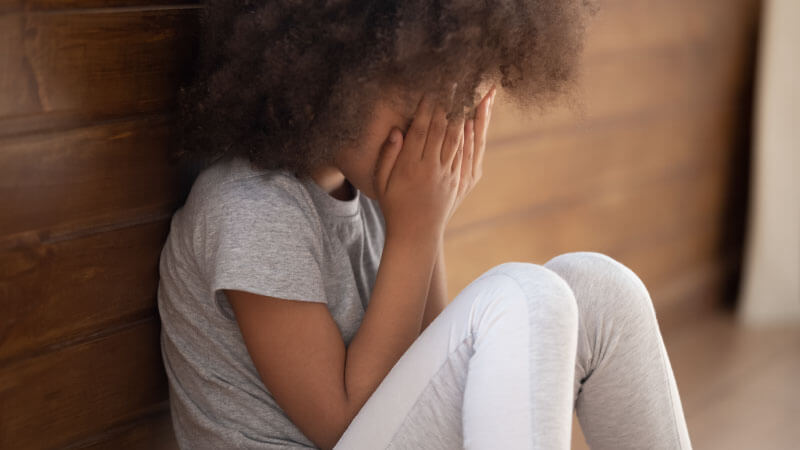
I still remember how afraid I was of spiders when I was a child. I couldn't even look at a picture of any kind of spider. Nowadays, I can see a spider without it causing me so much anxiety. Most children's fears are temporary and resolve themselves spontaneously as their cognitive (brain) development progresses.
All children experience fears at some point in their lives; sometimes, it can be difficult to distinguish between normal fears and phobias. Fear is defined as an unpleasant emotion accompanied by age-appropriate behavior, occurring in response to a real or imagined danger, and not significantly disrupting their daily lives.
Fear has an adaptive function and is necessary for survival. Its manifestation differs with age. Generally speaking, fears of separation from loved ones or of the dark are more common in young children. As children grow, social fears become more significant; fear of ridicule or public speaking is more prevalent in adolescence.
Fears and evolutionary development
Around six months of age, children begin to experience fear of heights, strangers, and separation from their parents, intensifying between one and two and a half years of age. These three types of fears are considered genetically programmed and highly adaptive.
At this stage, fears related to small animals and loud noises, such as thunder, begin to emerge.
Preschoolers (2, 5, 6 years old)
Previous fears persist, especially separation anxiety. As cognitive development progresses, more fear-inducing stimuli emerge. Common at this stage are fears of monsters, the dark, ghosts, or characters from movies or cartoons.
Most fears of animals begin at this stage and can last into adulthood.
Schoolchildren (7 to 12 years old)
Between the ages of 7 and 12, children are able to distinguish between reality and fiction; thus, fears of fantastical and imaginary beings gradually disappear, giving way to others related to the fear of real situations that could cause harm, such as fears of natural disasters, illness, or injury. This is the age when phobias related to injury, blood, and injections begin to emerge. Toward the end of this stage, although infrequent, a fear of negative peer evaluation or exams may begin to appear.
Adolescence
Fears from previous eras are significantly reduced. These fears are now associated with fear of criticism and rejection, academic failure (not achieving desired academic results), fear of ridicule, or fear of public speaking.
The phobia
The distinction between normal fears and phobias is not simple. A phobia is an unjustified fear of an object or situation that, although it may be recognized as irrational or exaggerated, generates an intense anxiety reaction in the individual, accompanied by a desire to avoid the stimulus, producing significant emotional distress.
Childhood fears are very common; between 30% and 50% of children experience one or more intense fears, but not all of them will have clinical significance. The prevalence of phobias ranges from 3% to 9% in children and adolescents, and they are more frequent in girls.
Factors riesgo
- Presence of a phobia in a family member.
- A temperament intolerant of frustration with a tendency to overreact to any everyday problem.
- Children of a more sensitive temperament, very dependent with poor autonomy for their age.
- Alterations in the mother-child relationship: these alterations in attachment are important because they are related to the development of social phobia and agoraphobia (fear of public places and open spaces).
The clinic
Children with phobias are usually asymptomatic when not exposed to the stimulus, which they can easily avoid without interference in their daily lives. If they are unable to avoid it, it will cause significant distress for the child and those around them.
Social phobia has a later onset, and in severe cases, it can lead to school refusal. School phobia is a risk factor for academic failure, with two peaks at ages 6 and 12. It could be a manifestation of anxiety disorder, separation anxiety, or social phobia.
Symptoms of fears and phobias
- Tachycardia, increased blood pressure and respiratory rate.
- Sweating, paleness, or blushing.
- Increased muscle tone and failures in concentration, attention and memory.
- Thoughts or images related to the danger of the stimulus.
- Crying, anxiety, anguish, and apprehension.
Diagnosis and treatment
Many phobias begin in childhood and can be a risk factor for developing pathologies in adulthood. Early treatment will improve the prognosis. It should involve the child, the parents, and the school. Families are essential in reinforcing or limiting these behaviors.